Low Error Rate Produces Happy Customers

Customers are our top priority and we show this by keeping our error rate low.

Coller IndustriesHere at Coller Industries Incorporated, we pride ourselves in our customer service expertise. Not only do we have a great team of Customer Service Agents, but our team members from Production and Shipping are also here to provide quality and accuracy with all of our products. Part of what makes us so great is our ability to keep our error rate so low.


    Here’s a quick review of our current year-to-date statistics:

  • Our overall error rate is 0.265%. This means that 1 in about every 400 orders may contain an error; great news for our customers!
  • Since January 1, 2016 we have had a total of 20 errors coming from 7551 orders total. And, to top that, 8 out of those 12 weeks have had 1 or fewer errors; more great news for our customers!
  • If we have 3 or fewer errors as a company during a one week period the company provides a “Free Lunch Friday.” If we have less than 8 errors in any 4 week period Coller Industries treats the entire company to lunch out at a local restaurant.

Not only are these benefits for the employees here at Coller Industries, but with these incentives to keep us going, our customers get to enjoy the satisfaction of doing business with an outstanding company. Having a low error rate increases sales and increased sales translate into happy customers. And with happy customers, Coller Industries remains in business to continue to serve everyone and their personal identification needs!

“Throughout each step of any and every project there is a double checking process that takes place. Everything hinges on getting the order checked completely and thoroughly before it gets out of customer service and into production,” says Aimee, our Customer Service Manager.

She goes on to explain the process that our customer service agents take with each order.

    COLLER INDUSTRIES’ ORDER REVIEW PROCESS:

  1. Orders are received by a Customer Service Agent and our Design Team makes a proof of the product.
  2. The order is sent to Quality Control for confirmation (meaning that the proof matches the invoice).
  3. The order is received into Production and is confirmed using an internal check sheet form.
  4. The order is then sent from Production to Assembly and is again compared using the same check list.
  5. The order is sent to Shipping and once more checked for accuracy before being sealed and shipped.

Once an order is received and goes into our internal system, it is checked on a consistent basis so that it remains correct and matches the original order placed. This means checking the invoice against the production page and finally against the actual, finished product. This process is followed for all orders received here at Coller Industries.

If anything changes, or an error occurs, during this checking process, the whole order is re-evaluated. We are also in continual contact with each of our customers throughout the entire order process to make sure that we are meeting exactly what they ordered and what they are expecting.

“I’ve tried to instill the mantra that each order is wrong until you prove it right,” explains Pat, our Production and Shipping Manager. “We are constantly, consistently and objectively checking each order,” he states. No assumptions are made that the order is correct, and as each order has 10 to 15 variables to it, meticulous checking is a must. “The people working here are a big part of the reason why this system works so well,” Pat says proudly.


keeping our error rate low to ensure happy and satisfied customers

From our customer service agents and our design team to our production and shipping team, the review process of each order is extensive and takes extreme concentration. We, as company, put all available resources we have into each and every order. And we always keep our customers involved in all processes and steps of every order so as to maintain our low error rate.

In the event that something does go wrong (we admit that we’re human and not perfect), there is always something that can be done to fix the problem, and most of these are typically corrected by the next business day.

“No matter the error, we always work with each customer in getting out a replacement as quickly as possible,” explains Slim, our Quality Control Supervisor. “We will always accommodate each order in whatever way we can,” Slim says.

Our Reorder Program

A key point to maintaining such a low error rate is our reorder program.

Once an initial order is received from a customer, our customer management system (we call it MOM for short) holds onto the design information to reduce the risk of errors. All layout information is saved so that we can recreate an original order exactly. Once in the reorder program, a customer can actually see a visual proof of any original design from the orders they have previously placed with Coller Industries so that they know exactly what they are getting when they place their reorder. This program eliminates any guess work on the customer’s end, and on our end, as to what the customer really wants.

Rod, one of our programmers, explains, “The customer does not have to guess which layout they want as they can see a picture and know for sure which item they are selecting. We have made entering or uploading a list about as easy as it gets; the count of items for the order is taken from the list thus making the quote we provide fairly accurate. All of this adds up to a reorder that can be entered in a manner of minutes with little to no hassle.”

“Before the new system, there was a lot of back and forth with customers to be sure the correct layout was used. Now (with the new program) the customer sees a picture of the product they are ordering from the start,” states Traci, Quality Control and Customer Service Agent.

With the automation of this reorder system, errors are kept at an all time low. “This has greatly reduced the order and list issues we have seen in the past,” says Traci.

Gary Coller, President of Coller Industries, states, “Efforts have been made to prevent many, if not all, errors from occurring. We also take the time to figure out why an error has actually happened when they do occur.” Gary credits the low error rate to our 5 Stage Checking and to the employee incentive program.

“Most importantly, we always take responsibility for our mistakes and no matter
what happens, we will make it right,” says Gary.

All in all, Coller Industries strives in every way possible to get each order not only out the door quickly and efficiently, but correctly! And our low error rate only proves this, not only to us but to our current and potential customers.
Lace and Ribbons

While it may seem an especially effeminate topic, ribbons and lace go hand-in-hand quite often.

From ribbon pieces, leftover lace, scrapbook supplies, and other items that we think we’ll use eventually, most craft rooms aren’t complete without a collection of odds and ends. Instead of collecting piles and mounds of these leftovers, throw them into your next project! From hair ribbons to party invitations to jewelry, ribbons and lace are great for any project.

In an attempt to follow the trend of last week’s post, here are some ideas to use up that scrap lace and ribbon rolls.

ribbon rolls and lace for party or shower invitations
ribbons and lace for hair bows, head bands and jewelry items like necklaces and bracelets
ribbons and lace on wedding cakes also use for baby showers and other events
ribbons and lace pew decorations wedding and party decorations

Use them as clothing embellishments

Have an old t-shirt that you can’t seem to get rid of because, “I’ll wear this again someday.”? Try updating the look with ribbon, lace and whatever other embellishments you have on hand. Form a collar using lace pieces and weave a colorful ribbon through the ends. Or, take that ribbon roll and form a fun and flattering pattern over the front, or back, of the shirt. Don’t stop at shirts, update pants, skirts and any other clothing item you might want to experiment on.

Use them as jewelry or hair accessories

Chalk it up to traditional or basic, but ribbons and lace look fabulous in your hair or worn around your neck. Braid a small ribbon into your hair, wrap either one around a head band for a quick and cute look for your evening out. Or, find some beads and create a one-of-a-kind statement jewelry piece to match that shirt you just updated!

Use them for gift wrap or cards and invitations

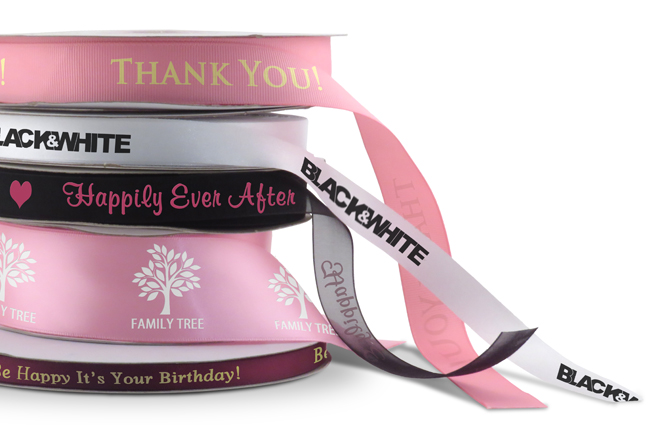
What a classy way to dress up any party invitation or wrapping paper. Whether for a bridal shower or just a friendly gift, tie it up with a piece of lace and some brightly colored ribbon. Need it to be extra special? Order custom ribbon rolls with names, dates or other wording to really hit home how personalized this gift really is. The receiver will be ecstatic about the gift or invitation!

Use them in decorating

Here’s an idea that is as traditional as they get. Ribbon rolls are great for decorating windows or using for wall hangings. They are perfect to wrap around candles or other items for centerpieces for weddings, parties or other fun festivities. Or, wrap that ribbon delicately around the base of each tier on a cake. And make it even more special by adding pieces of lace throughout all the decorations!

Whatever your idea, simple or complex, ribbons and lace is a classic look that is always welcome!

Buttons and Ribbons Projects

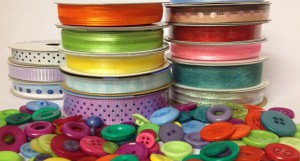
buttons and ribbons projects from a craft room

From buttons, ribbon pieces, leftover lace, scrapbook supplies and other items we think we’ll eventually use, most craft rooms aren’t complete without a collection of odds and ends. You probably purchased these items for other projects that ended up not using everything purchased or not using them.

So, what do you do with all those leftovers? You can’t return them and don’t feel right throwing them out. So, do you recycle them or give them away? Nope, keep them! You might eventually use them, right?

How many of us have extra buttons laying around the house or a craft room?

Instead of collecting piles and mounds of these leftovers, throw them into your next project! From hair ribbons to bookmarks to jewelry, buttons and ribbons are great for any project.

Does someone you know have a birthday or other celebration coming up? First, make them a homemade card with buttons and ribbons to acknowledge them on their special day. Then, follow up with a specialty ribbon medal made with those leftover pieces as a wonderful and personal gift.

Need to update your style? Take that old, worn out t-shirt out of the closet and add buttons and ribbon in complimentary colors to the hem, front or back. Use your imagination for this project to make your wardrobe truly unique.

Need a great piece to put with that fabulous new outfit? Match ribbons and buttons together to make fabulous one-of-a-kind jewelry, from earrings to bracelets and everything in between.

Don’t know what else to use these odds and ends for? Create your own projects, such as button and ribbon bookmarks or hair bows for your kids. Or simply wrap the next gift you give with colorful buttons and ribbons. Let your imagination dictate the direction you take, and remember, “the sky’s the limit!”

Logos on Ribbons

While ribbons are a great tool to use in the office or in commercial settings, the best use is adding personalized logos. These logos can range from basic and simple, to somewhat complicated. By adding these logos to custom ribbons, whether they are ribbon rolls, badge ribbons or rosette ribbons, you can take full advantage of the advertising that comes from these wonderful tools.

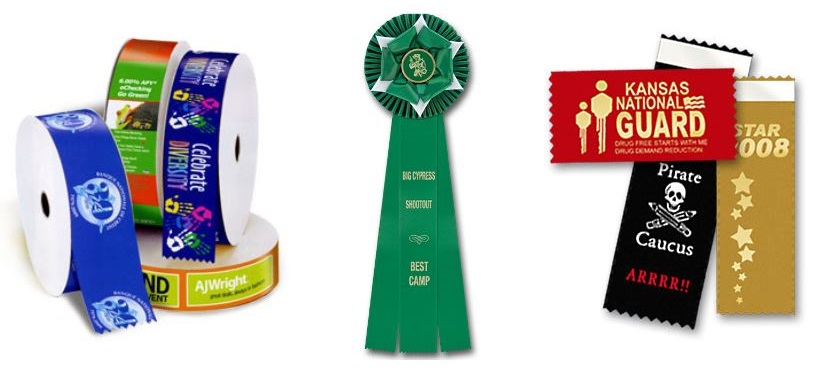
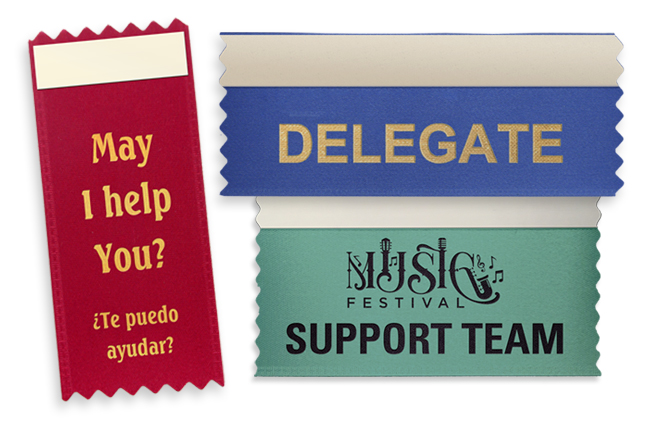
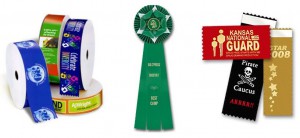
Ribbon rolls, rosettes and badge ribbons all using logos on the ribbons.

A well designed logo signals a well run business. When you add a logo to custom ribbons, you connect employees and other company representatives with the brand image the company has built. We require that these logos are provided in specific ways.

All processes require high quality artwork.

A designer reviews every artwork file and makes adjustments to your order if necessary. You will see these adjustments on a proof before production begins. Imprinted ribbons require black and white (one color) art files. You can create full color ribbons using vector art or quality bitmap files.

Templates are also available to aid customers in the process of creating logos and placement for ribbons. All art received by Coller Industries Incorporated must be in compliance with all trademark, copyright, patent or related laws or acts and are the responsibility of the customer. And, as always, customer service is happy to assist where and when necessary.

  • VECTOR ART: Imprinted ribbons require vector art files.
  • BITMAP ART: Full color ribbons may use either vector or bitmap artwork (300 dpi or better).

That said, you can use logos as a fun way to express yourself.

They are a great tool to help promote and brand a business or organization. Company branding helps to expands a business or get the word out about the company’s purpose.

Corporate branding is the process of promoting the logo and/or brand name of a company or corporation for marketing and advertising purposes. A corporate brand typically covers a broad range and expresses the company’s ideals and goals.

Your corporate brand will be handy for any corporate gifting, or when recruiting and retaining employees. Use it to your advantage by promoting it with ribbons.


Ribbon Colors and What They Mean

Ribbons are more than just ornamental accents; they are symbols that mark or celebrate various events. Different ribbon colors are displayed all year long to commemorate important occasions, support charitable causes and demonstrate unity. Ribbons are frequently used to provide a festive touch to celebrate special occasions like birthdays, weddings and other private gatherings. They can also offer crucial information and identifiers and formally recognize accomplishments.

Have you ever wondered the following? “What does that yellow ribbon tied around that tree mean?” Or, have you wondered, “Why is someone wearing that particular ribbon color?” Ribbons have profound symbolic meanings that can represent a variety of causes, occasions and recognitions. Knowing these meanings can help you grasp a wide range of events and activities.

The Importance of Ribbon Colors

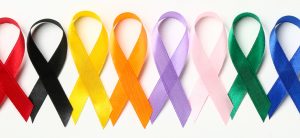
A ribbon’s color has more significance than just being a decorative choice. Especially when it is used to support a cause or express support for a certain issue. Awareness ribbons, each color representing a distinct message, are frequently folded and fastened into a loop. These ribbons are an easy and effective way to express a position on various subjects. Depending on the color, these ribbons can represent anything from solidarity with a humanitarian cause to supporting a loved one fighting cancer.

Three women working together during an outdoor retreat wearing teamwork ribbons.

Although awareness ribbons are typically linked to particular colors and causes, it is crucial to remember that color has meanings beyond awareness campaigns. For instance, the color of the ribbons still significantly impacts the overall sense of awards or event decorations. However, ribbons used for more intimate and celebratory occasions, such as weddings, graduations or birthday parties, are colored according to their aesthetic value or symbolic significance for the occasion.

Whether ribbons are worn on a jacket, displayed on a tree or presented as a badge of honor, we may better appreciate their role when we understand their broader importance. Ribbons can connect people and communities by expressing messages of celebration, support, remembering and accomplishment.

The Meaning of Ribbon Colors

Colors can shape experiences and influence feelings and interactions. They do more than simply fill or decorate a space. Understanding the different emotions colors create can boost the impact of your message. So, whether you are attempting to promote awareness, build support or create a particular atmosphere, understanding these effects will help you establish the necessary emotional connections.

With this discernment, you can build a more purposeful experience for your audience that appeals to both their conscious and subconscious minds. So, selecting ribbon colors for event decorations or an awareness campaign requires understanding the associations and emotions that different colors evoke.

Blue Ribbons: Why They are so Iconic

From politics to awareness, blue ribbons have been around for a long time. Throughout the year, colored ribbons, especially blue ribbons, celebrate and honor many occasions and holidays. But, unlike any other color, blue is prominent as being the most iconic. Just like every other color, blue ribbons represent many things. From first place at a county fair to showing support for the ACLU, this color is spotted all around the world.

Blue ribbons are a symbol of high quality. The association comes from The Blue Riband, a prize awarded for the fastest crossing of the Atlantic Ocean by passenger liners. Prior to that, it comes from Cordon Bleu, which referred to the blue ribbon worn by a particular order of knights. From New York Fashion Week to award shows like the Oscars, models, actors and other celebrities wear blue ribbons to show their support.

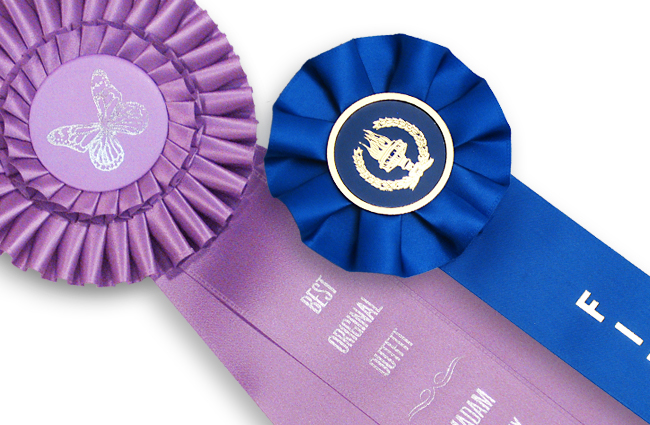
A blue rosette for first place with a victory torch on the center button.

Receiving a blue ribbon is quite an honor. At fairs, those with the biggest crop or the best looking livestock receive a ribbon to recognize their achievement. The same typically goes for winning at a sporting event. The winner receives a blue ribbon, while runners up receive other colors.

Blue (this comprises all shades) represents trust, loyalty, wisdom, confidence, protection, intelligence, tranquility, integrity, healing, understanding and devotion. The use of blue for awareness can represent assault and abuse, natural disaster victims, drunk driving, anti bullying, addiction recovery, cancer, dystonia, education, anti-tobacco, arthritis, free speech and water quality.

Ribbon Colors: Pink for Awareness

Pink is the chosen color for breast cancer awareness. The Susan G. Komen Foundation, established in 1982, has been associated with the color pink since its inception. Their early logo, from the mid-1980s through the early 1990s, featured an abstract female runner with a pink ribbon. In 1991, the Komen Foundation handed out pink ribbons to participants in its New York City Race for the Cure. This race is often cited as the first widespread use of the pink ribbon for breast cancer awareness. National Breast Cancer Awareness Month officially adopted pink as its color in 1992.

Ribbon Colors: Pink for Awareness

Pink: The color pink is often associated with feminine qualities and is seen to represent caring, beauty, goodness, and cooperation. In the context of breast cancer awareness, the pink ribbon symbolizes hope for the future. It represents the compassion of individuals and organizations supporting the cause. Pink, for awareness, is also a symbol for birth parents and nursing mothers.

Red Ribbon Week

What is Red Ribbon Week? The wearing of red ribbons started in 1988 to raise awareness of the destruction in America that is caused by drugs. Many schools across the US participate in Red Ribbon Week during the final week of October.

This event started with Nancy Reagan’s help and has become the nation’s oldest and largest drug prevention program. During the week, schools develop programs and games to help children be aware of the dangers of drug use. From brightly colored hair to silly outfits, schools fill with excited kids participating in fun festivities.

Red Ribbon Week Campaign logo

Design a ribbon that helps spread that “Just Say No” message. Add ribbons to clothing, notebooks or backpacks to show support. These bright ribbons will pledge awareness to this particular cause. Regardless of your ribbon choice, make your statement during your next Red Ribbon Week. So, sport your red and stand for awareness!

Red: This color radiates intense, passionate, powerful energies that motivate us to take action. However, red is also a warning and can signal caution and danger. The use of orange for awareness can include burn victims, cardiovascular disease, courage, inspiration, DARE, stroke, AIDS and HIV.

An Orange Ribbon to Show Support

Throughout the year, colored ribbons celebrate and honor many occasions and holidays. Each ribbon can stand for different things depending on its color. And now, there is a new meaning to an orange ribbon. To shed a “positive orange glow” in Canada, Judy McPherson from Penticton, British Columbia, proposed wearing an orange awareness ribbon to support firefighters, volunteers and their families.

“People just want to do something, anything to show their support. There is never anything said negative about it when I approach people,” said McPherson. “There are so many people doing so many other things, too; I just want to make sure the firefighters see it and know we are supporting them.”

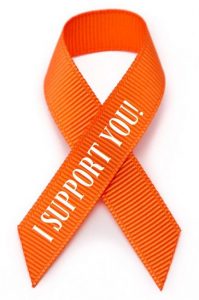
An orange awareness ribbon to show support.

McPherson moved to the Okanagan from the Coast. She said it was while sitting at the beach watching helicopters filling their buckets as they dumped water on nearby fires that she decided she wanted to do something to show her support and gratitude to the firefighters. The idea of the orange ribbon was born, and she started creating them and handing them out to friends, family and even strangers.

Orange: This color exudes warmth and joy, encouraging emotional strength, social communication and creativity. The use of orange for awareness can include cultural diversity, leukemia, malnutrition, ADHD and self injury.

Safety and Going Green Using Ribbons

Going green sometimes has a different meaning from recycling. In this instance, it means remembering the importance of pedestrian safety. Whether wearing mismatched socks, having crazy hair or merely wearing a ribbon, many schools remind their students about pedestrian safety by using green. While telling people about street safety seems simple, a physical device like a green ribbon can sometimes make a huge impact.

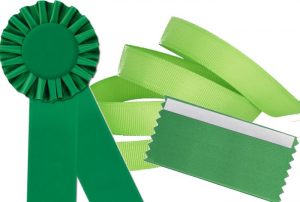
A variety of green (rosette, ribbon rolls, badge).

Getting everyone involved is key to this socialization. Parents and kids alike need to be aware of their surroundings. Everyone starts actively seeking safety by dressing in green or wearing a colorful ribbon. Parents can pledge to be more careful when driving, and students can promise to watch when crossing a street.

From blank badge ribbons to custom printed ribbons, design something that helps to get out your safety message. Add ribbons to outfits, notebooks or backpacks to show support and promote safety. These ribbons help to pledge everyone’s awareness. Or you can even tie a green ribbon around anything from car antennas to backpacks and people! So, wear your green ribbon today to help promote safety.

Green: Green inspires harmony and health. It is a warm, relaxing color that helps balance our emotions. The use of green for awareness ribbons can also represent environmental concerns, depression, growth and rebuilding, literacy, mental health, cerebral palsy and tissue donation.

Ribbon Colors: Yellow for Awareness

Many support groups have adopted ribbons as symbols of support or awareness. This ribbon type dates back to 1917, when the yellow awareness ribbon showed up to support the US military while serving abroad. Since then, ribbon colors have been associated with various causes and symbolize various concerns depending on the color and pattern.

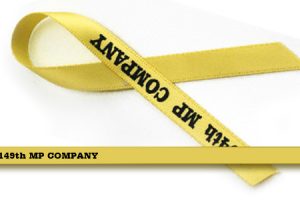
Yellow awareness ribbon with a business name imprinted in black.

Yellow is typically a bright, cheerful, energetic color that inspires thought and curiosity. It is meant to boost enthusiasm and confidence. Yellow for awareness ribbons can include hunger, cultural diversity, leukemia, cancer, self injury awareness, support for troops and suicide prevention.

Other Important Ribbon Colors

Purple: This color represents spirituality and imagination. People often associate purple with luxury and royalty. The use of purple for awareness can include ADD and ADHD, Alzheimer’s, domestic violence, elderly abuse, epilepsy and March of Dimes.

White: The purity and lightness of white stand for intuition, faith and innocence. The use of white for awareness can include blindness, bone disease, osteoporosis, postpartum depression, peace, adoption, child exploitation, elderly abuse and violence against women and the community.

Black is a deep color that shows formality, strength and elegance. It can be intimidating, but it exudes authority and makes us feel secure and protected. The use of black for awareness can include mourning, including the loss of a child, POW/MIA, anti-terrorism and gun control. People use black medically for narcolepsy, sleep disorders and melanoma.

Gray: The calming influence of gray is peaceful, relaxing and soothing. However, it is also a conservative and unemotional color. The use of gray for awareness can include allergies, aphasia, asthma and brain cancer.

Brown: Standing for stability and reliability, brown is dependable and comforting. The use of brown for awareness can include disability, spinal cord injuries, paralysis and anti tobacco.